Contact us fot any questions ++254727531250,
Write us at: wad@nsdcc.go.ke
Each year, World AIDS Day is observed globally on December 1 to honor lives lost to HIV, celebrate progress in the HIV response and show solidarity with people living with and affected by HIV.
The National Syndemic Diseases Control Council (NSDCC), in partnership with County Governments, Development and Implementing Partners, communities of people living with or affected by HIV, and other stakeholders, organizes the National World AIDS Day Half Marathon and Commemorative Event annually Nationally and at the County level.
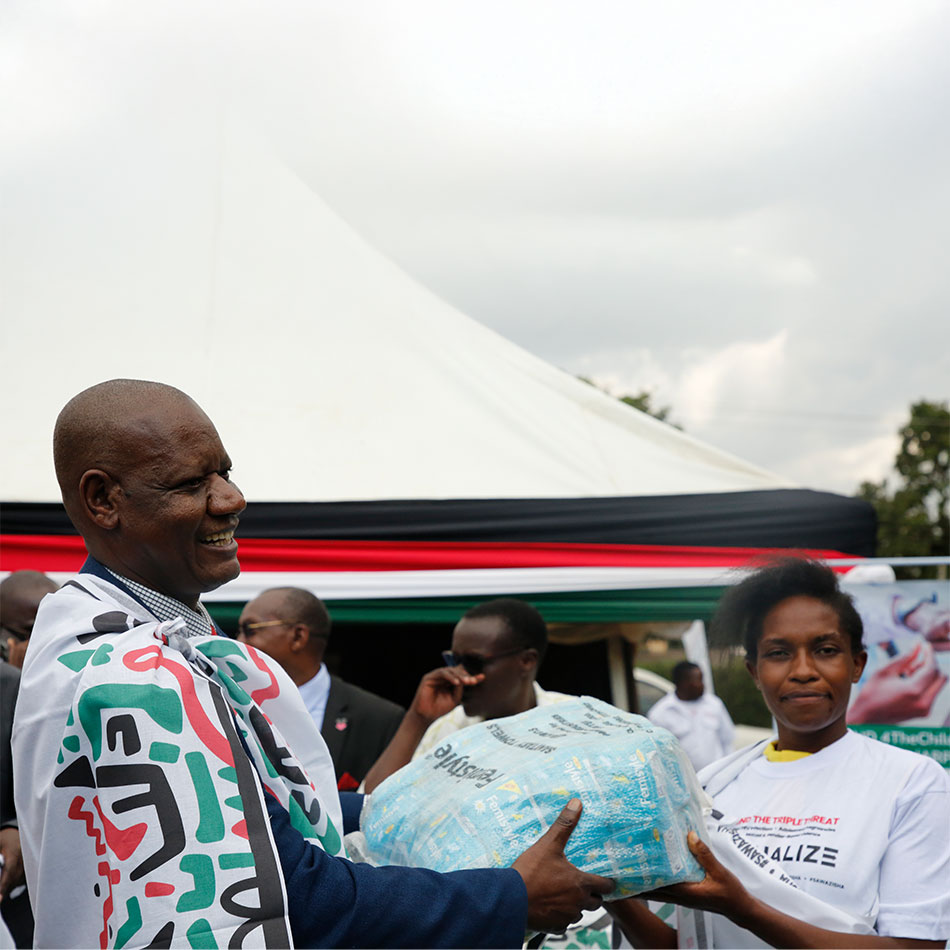
This flagship event leverages Kenya’s world-class athletic legacy to drive advocacy, raise public awareness, and mobilize communities ahead of county-level commemorations held every December 1. The Half Marathon highlights the triple threat facing adolescents and young people: new HIV infections, adolescent pregnancies, and sexual and gender-based violence.
All proceeds from the marathon are directed towards the provision of dignity kits for vulnerable girls and boys, promoting health, dignity, and protection for those most at risk. Through this initiative, NSDCC continues to champion a unified, impactful, and community-driven response to HIV and related syndemic challenges in Kenya.
All proceeds from the marathon are directed towards the provision of dignity kits for vulnerable girls and boys, promoting health, dignity, and protection for those most at risk. Through this initiative, NSDCC continues to champion a unified, impactful, and community-driven response to HIV and related syndemic challenges in Kenya.
Ending AIDS is within our reach if we confront the triple threat of new HIV infections, mistimed pregnancies, and sexual and gender-based violence among adolescents and young people head-on, empower women , and embrace open, honest conversations on sexuality and education. The same unity that helped Kenya overcome COVID-19 can drive us to an AIDS-free future.
Veronica Maina
Chair, KEWOSA




Raise awareness on HIV prevention, treatment, and care while keeping the national HIV response visible and relevant to the public.
1
Raise awareness
2
Promote healthy lifestyles
Promote healthy lifestyles and demonstrate that people living with HIV can lead active, productive, and healthy lives.
Reduce stigma and discrimination by uniting communities, leaders, partners, and people living with HIV in a shared, inclusive public event.
3
Reduce stigma and discrimination
4
Promote dignity among girls and boys
Promote dignity among girls and boys by mobilizing donor support for dignity packs, ensuring access to essential hygiene and menstrual health supplies that support health, confidence, and school retention.
Amplify key HIV messages by combining sport, advocacy, and media attention to reach wider and more diverse audiences.
5
Amplify key HIV messages



